Looking back at 2021

I realize that the vogue thing to do was to have written this a couple of weeks ago, but 2022 has been a slow and gentle easing into the year. More like the painful creep into too cold lake water for a swim rather than the enthusiastic cannonball of getting it all over with at once and then shivering for 15 minutes. So midway through January, I’m just about ready to consider what, if anything, I managed to accomplish in 2021. (Spoilers: It didn’t feel like much, but there were a few things here and there).

First off, full disclosure time: No. I have not yet finished all 12 samples for my 2020 sampler of embroidery styles. I got stalled at nine, and my brain has just been absolutely rebelling at the notion of those last three. In theory, two of which are my favourites (open work and needle lace). I know I hate lacis (so far), but the other two should be a delight, but I’ve had a pattern on my desk for 4 months for a needle lace piece and not even a hint of enthusiasm, just dread. So I’m accepting that reality and we’ll see when it gets done. That’s okay. Life is heavy right now, I don’t need to be a harsh taskmistress upon myself, so it waits.
I did a lot of SCA teaching in 2021 on zoom. Mostly dye classes, a class on saponification (the chemistry of soap making), round tables and discussions. I acted as moderator and TA and general helper all over the place online and it was good. I should do that again. I’m still mad that I missed the deadline to sign up to teach at University of Atlantia this winter, but that’s besides the point. I taught at least seven times in 2021, and in at least 6 kingdoms, which is not half bad, really. Only possible via online events, I would be hard pressed to get to six kingdoms in a year (our most in our craziest travel year was 5.) I’m expecting 2022 to look much the same, provided there are online events to be had. We shall see.
When I went tallying up my finished objects for 2021, my list got to 20. I’m hoping I forgot at least one, so that I can happily claim 21 FOs in 2021, but it’s not the most complete list. Highlights.. I’m very proud of two different projects where I started with plain white silk and dyed all the colours I needed and then worked the project. One was a knit heraldic pouch for an exchange, and the other was leafy trim for a friend’s laureling outfit. (Yes, even the underdress that no one saw had hand dyed silk trim.) A good mix of modern sewing, medieval sewing, modern embroidery, medieval embroidery and a lot of dye work. I kicked myself into making an effort to try new things. Some of which I enjoyed very much, a few of which that I learned that I don’t like it at all. Both pieces are important information. I expect 2022 to look much the same really.
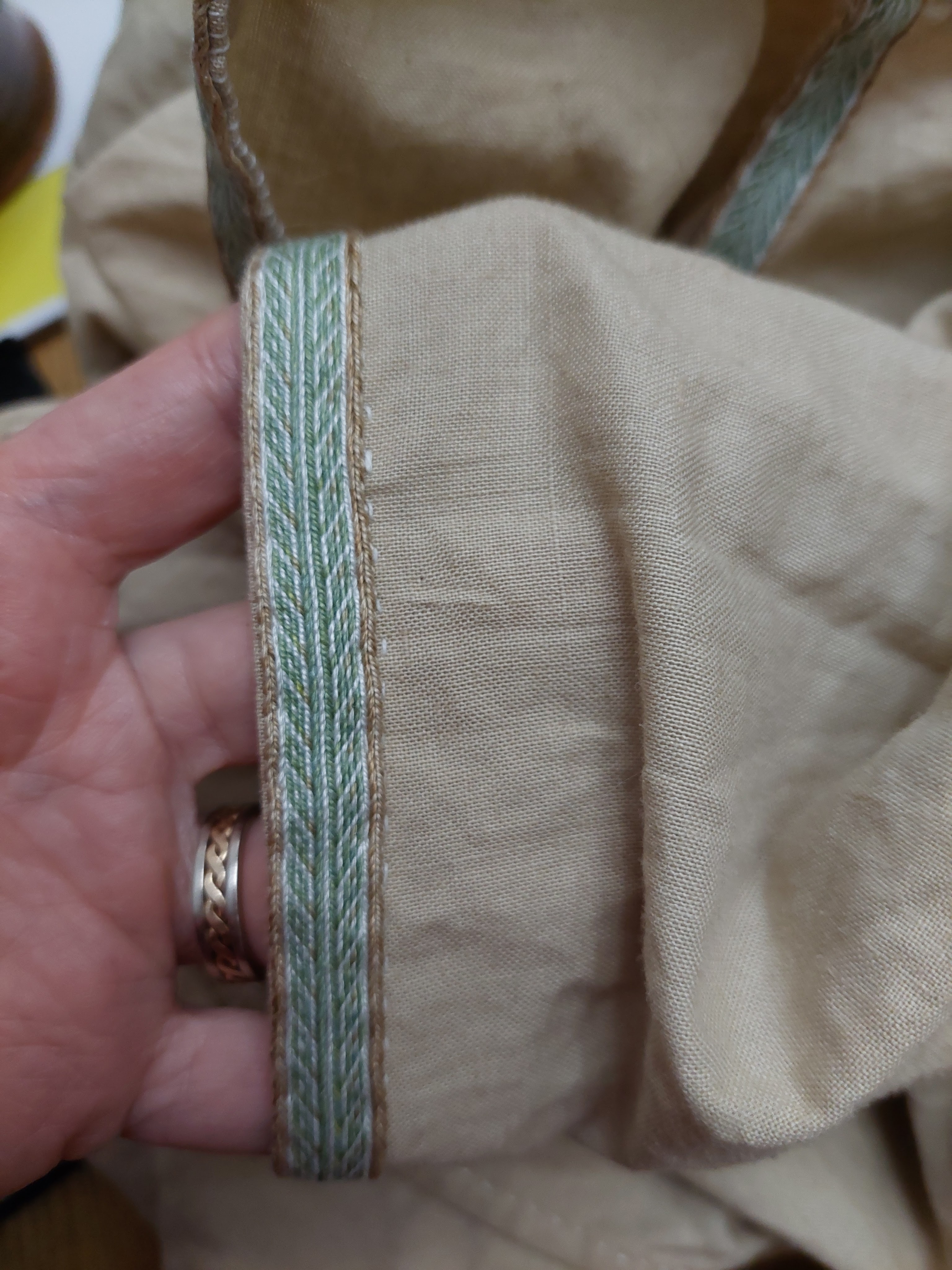
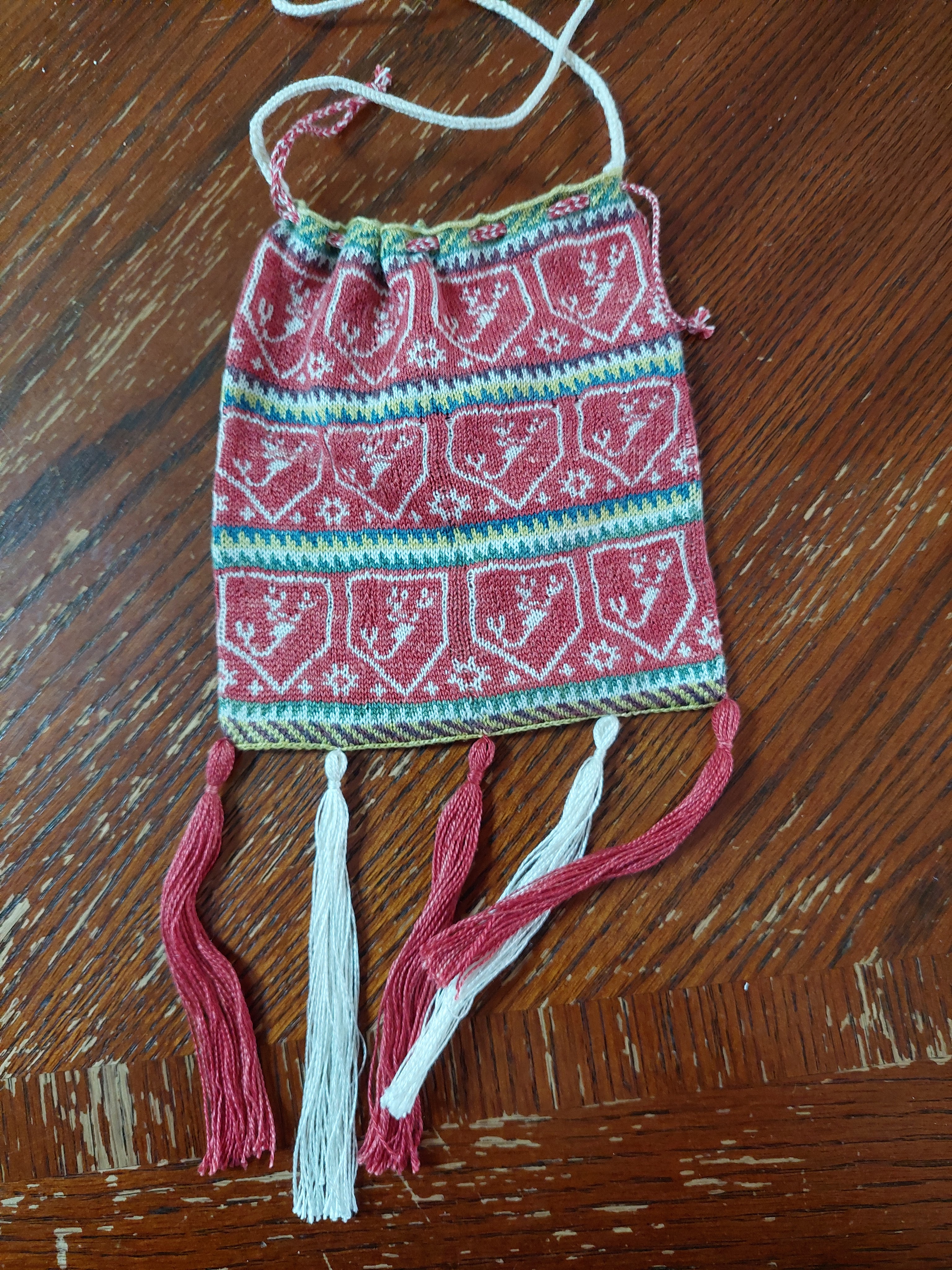
I’ve plans for 2022, a big dye project, some sewing .. currently a lot of nebulous uncertainty that fits well with the copious amounts of nebulous uncertainty swirling around the world in general. I do hope to share more projects here. Let’s see what the future holds! May it be colourful and gentle.
And now for something completely different…

The last few weeks have been all about shoving me forcibly outside my comfort zone. Usually entirely in manners of my own devisings, really, but when you pause and go ‘what on earth have I gotten myself in for!?’ very shortly thereafer, you know you have found yourself solidly outside your comfort zone. It’s entirely because of various events that have been going on recently. The first was the Lady Mary Memorial Tournament, which was a scavenger hunt this year. Not a ‘find the object’ hunt, but a ‘complete these tasks’ sort of quest, done in teams. I.. am a competitive person. I don’t say that with pride, it causes me more grief than anything else, but when it comes to leaving points on the table in a ‘friendly’ competition.. well that was just not going to do.

My best beloved and I pretty much act like a set in most things, and this was no different. First up was well within my balliwick, teaching a class in 60 seconds. Saponification is (relatively) easily explained, and I have a slide deck! 8 takes later (I kept getting to 63 seconds, grrr!) and voila! One challenge done and dusted.

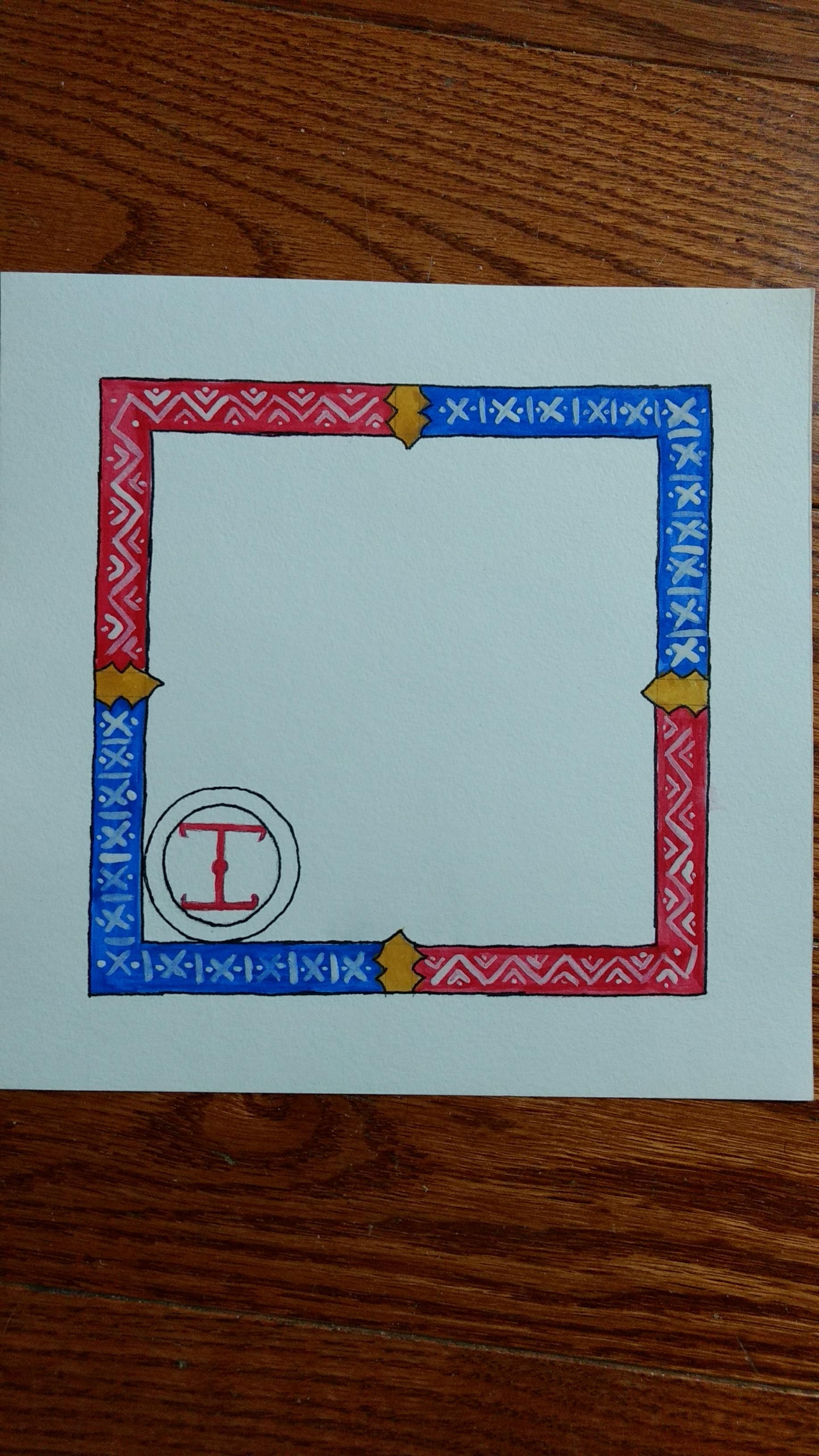
Next up, I decided to face the harder ones (for me at least) and dig into scribal. A whole lot of web searches later (and talking myself in.. and out.. of the idea) and I found some scroll blanks that looked to be not too hard. I knew full well that these were going to be very beginner, but my goal was to enter anything in the category, and not let my amateur efforts hold me back. Everything is still closed here, so I was hunting through the house for something to make a scroll from. I decided to go with cold pressed watercolour paper (8″ x 8″) and the watercolours that went with it. I have no clue why I own watercolour paper and watercolours, I haven’t used watercolours since elementary school, but there we have it, so off I went. It worked not too badly! I did a basic layout with pencil and then took a deep breath and went for it. I need smaller brushes for white work (found some for the second scroll!) and more opaque white would help too. Also? That lion is a nightmare, but I am generally pretty darn pleased with myself. The challenge was to work up scroll blanks for two specific baronial awards for the hosting barony.

Returning back to ‘things not done since elementary school’, there was a challenge to produce period music and after some asking around, we settled on a recorder duet. My spouse can play recorder, any of the dozen or so that live in our house. I last played recorder sometime in the early 1980s. I do still read music, but remember exactly zero fingerings. Fortunately the piece we found had a harmony part sufficiently simple that I could learn my four notes (yes, literally four notes for my part!) and off we went.

Phew, I think that’s enough new for one post, stay tuned for more pushing me outside my comfort zone that happened all through May!

April is for Padded Work

I was vaguely musing on what to do for the Padded Work category of the EK Embroidery guild samples. The usual is stumpwork, which while it can have some padded work, is best known for being exceptionally fine work, usually with a wired edge so that it can be posed in 3D. It’s gorgeous, it’s fussy, it’s tiny fiddly work and while usually that is 100% my jam, I wasn’t feeling it. There was a ton of meh about doing a stumpwork piece.

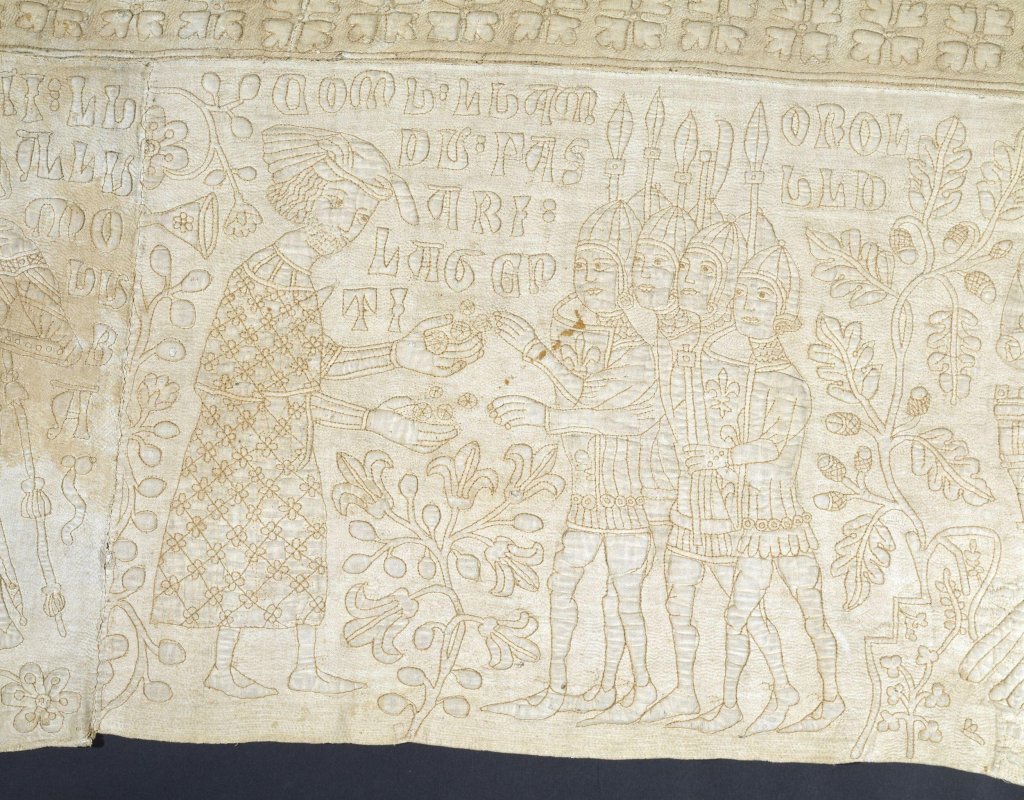
Then, at a panel, someone had done a trapunto piece, and it was gorgeous and simple but elegantly so, and someone in chat noted about the Tristan Quilt being in period and I had a ‘where have you been all my life’ moment.

Just one panel!

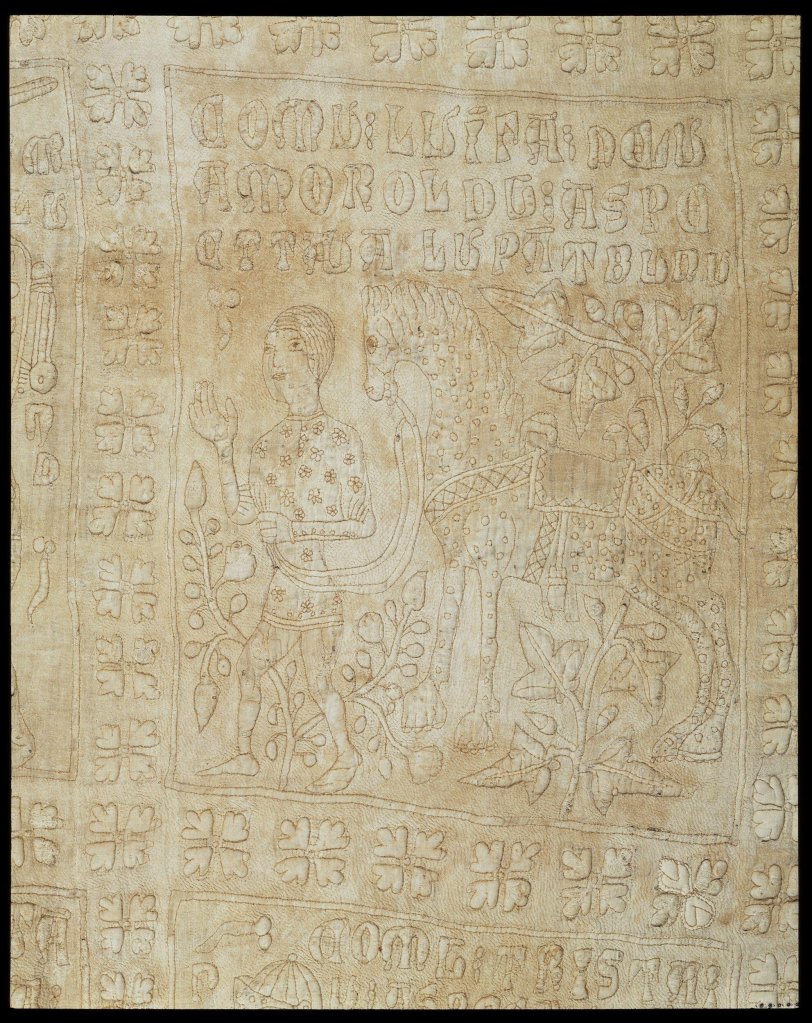
So, some back story. The Tristan Quilt is how its most often referred to, but it is probably better referenced as the Guicciardini Quilt, as it is suspected that it was made for the Guicciardini family of Florence, and figures in the quilt (Tristan) bear that family’s arms. It is a bed covering that was made between 1360 and 1400 (or so), with the story of Tristan and Isolde quilted into it in many panels. It’s monochrome, dark brown thread on cream coloured linen, and is enormous. The chunk at the V&A is 320 cm x 287 cm (126″ x 113″) , the chunk at the Museo Nazionale del Bargello in Florence is 238 cm x 207 cm (98″ x 81″) and there’s speculation of the missing bit being as large as either of those chunks, or possibly a little bit larger. (For reference, a modern queen size mattress is 60″ x 80″) and current research speaks to them being part of one giant quilt to start, and hacked up in later eras. (Randles) They are the oldest surviving examples of decorative quilting in Europe, and I fell in love.

Dude and his spotted horse.

So! I had my inspiration piece, and then I went hunting through online images to find a wee bit of the giant whole that I wanted to add to my samples. I considered the horses, but once they were down to something that fit into a 6″ x 6″ square, they were too small to stuff with any sort of interest. Then I found the fish. And well, that was that. Fish it was to be!

Fishies!

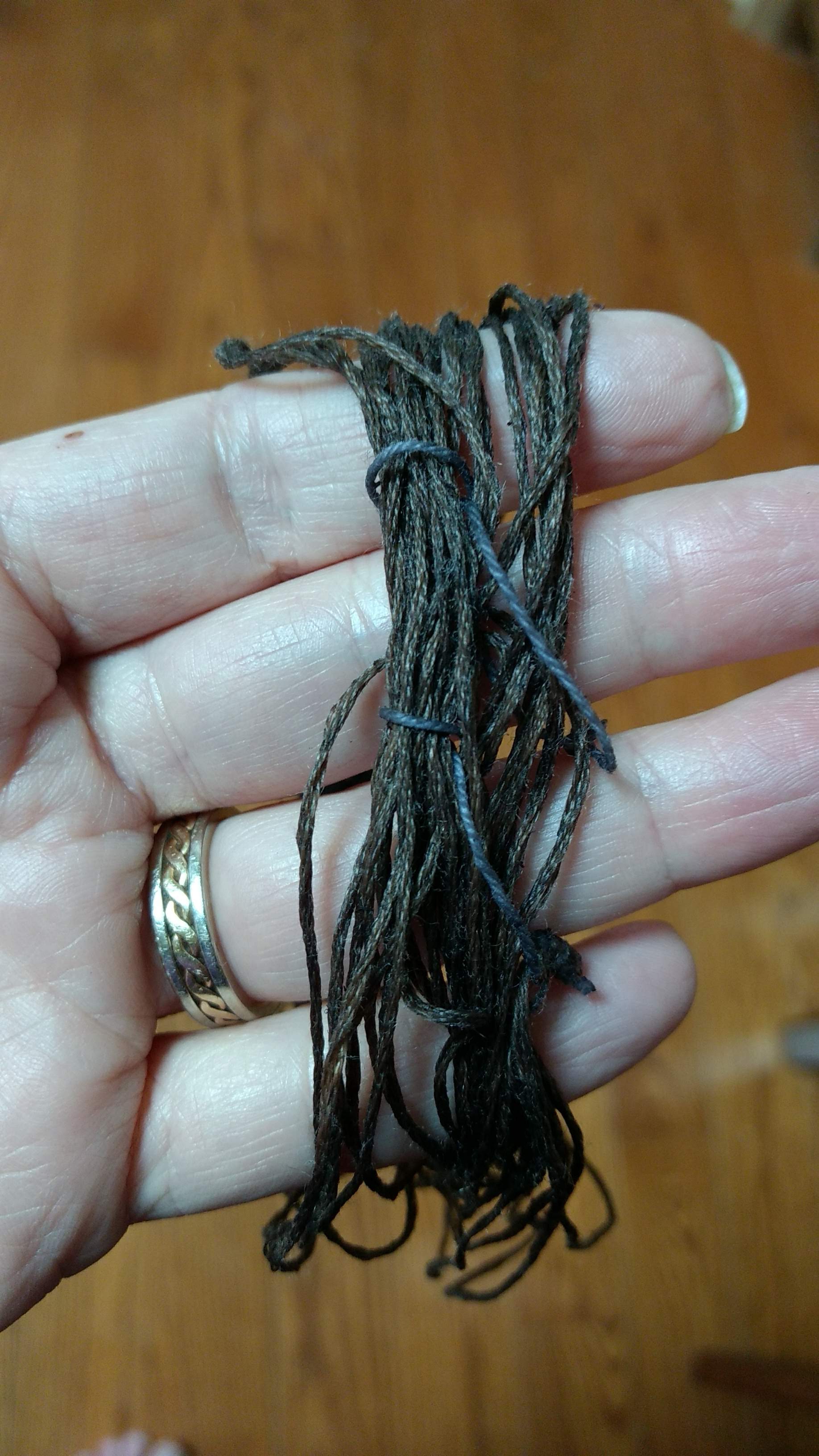
I chose a natural oatmeal coloured linen for my backing fabric, and then took some linen embroidery thread (conveniently stranded for me) and dyed it with an unholy combination of iron, pomegranate, walnut and padauk to get a fairly good dark brown. Not quite as dark as I wanted, but good enough.

Dyed linen thread

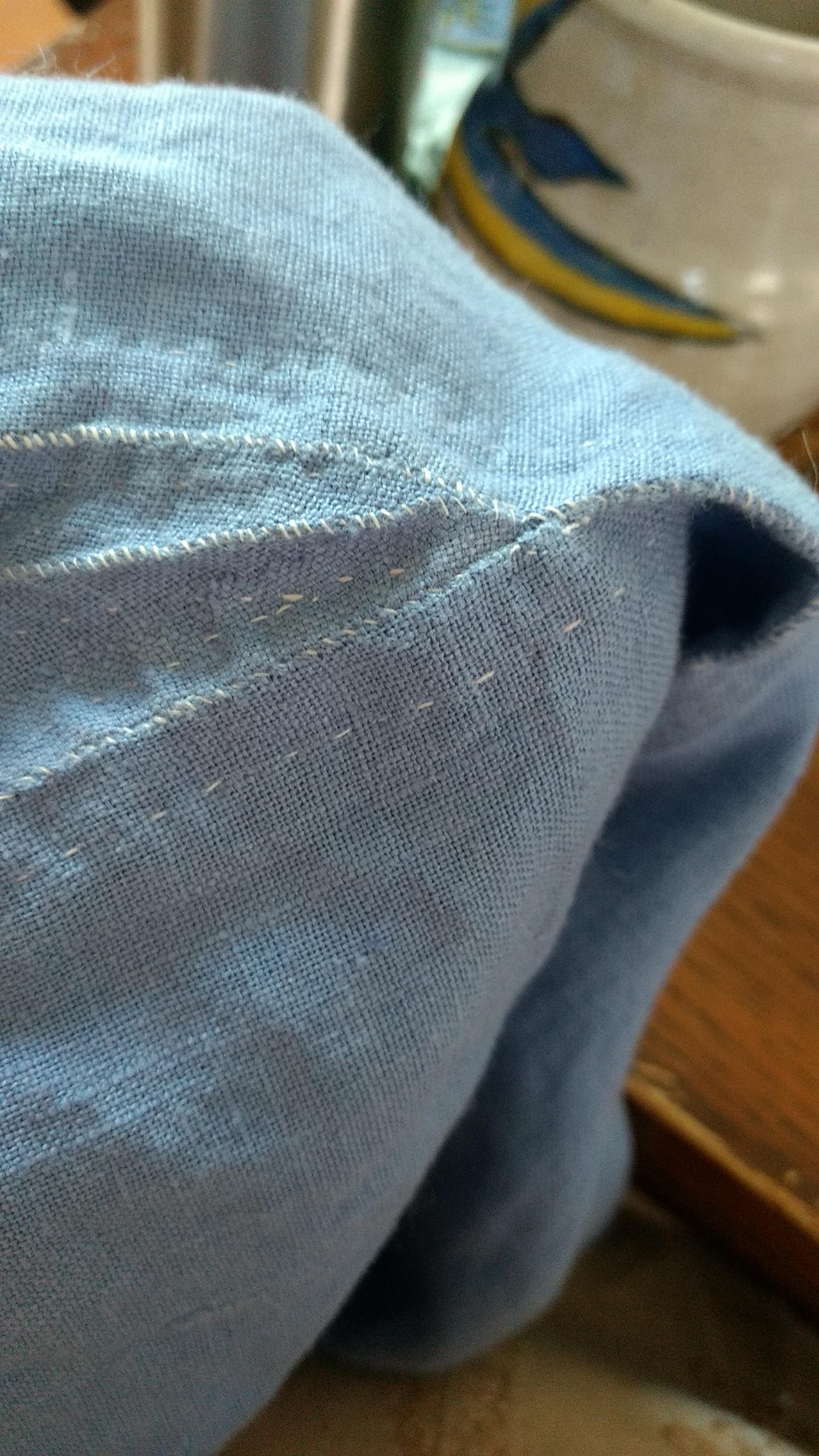
While a lot of trapunto is done by either cutting, or teasing apart the loosely woven back fabric to shove your cotton, or wool, batting into the stuffed sections, and then adding a backing, the original was not done that way. The stitching is shown on both sides, and the back fabric is as tightly woven as the front, so it is speculated that it was stuffed as they stitched. I went with that tactic on my fish as well. While there is no indication of traced out lines on the original, I have no illusions about my artistic skills and used modern washable fabric marker to trace out my fish and some background squiggles.

The blue is so startling. I promise it will all go away.

Being a ‘stuff as you go’ experience, it makes the most sense to start in the middle and then work your way up and down. So fish first! Stitch an area, add wool fleece (the original was cotton, I’m using wool because it’s what’s in my house.), shove fleece to where it’s supposed to stay, stitch more. Then add some details on top, and shove more fleece in. It’s a fairly basic procedure, all in all, if a little fussy to get the fabrics to stay relatively flat, with the fleece not spilling too far.

Fishie backside.

The stitching, even with fighting with fleece, went quickly. I used a basic back stitch throughout, and it was really a satisfying experience. I can utterly see why they’d choose something like this for a giant area, it is pretty zen and works up pretty fast.

A hem around the edge and then a quick bath to get rid of the marker and then voila! Fishy, fishy, fishy, fish!

All done!

References:

Randles, Sarah. “One Quilt or Two? A Reassessment of the Guicciardini Quilts.” Medieval Clothing and Textiles, Pp. 93–128. Accessed April 30, 2021. https://www.academia.edu/4523166/One_Quilt_or_Two_A_Reassessment_of_the_Guicciardini_Quilts.

Padauk experiment redux

When I wrote about my experiments using padauk wood shavings and isopropyl alcohol (rubbing alcohol) vs ethanol (vodka), there was a great conversation (mostly on FB alas) about it all. Those very same people who prompted me to do the first set of experiments, of course, had more questions. As did I! The main question that came out comes from how much distilled alcohol differed from fermented. So we (I) decided to do more playing.

The obvious one is concentration. Vodka starts out at 40%, my ale was 4.2%. (I brewed the ale in the last post, it’s not worth drinking, don’t be sad that I soaked wood in it. Better than it deserved really.) I finally remembered to soak some of the padauk in water, as I hadn’t done that in the last one, having done it before, but I don’t think I’ve ever proven to you, gentle readers, that padauk does basically nothing when soaked in water, so I figured I’d prove it.

Turkey basters are very scientific

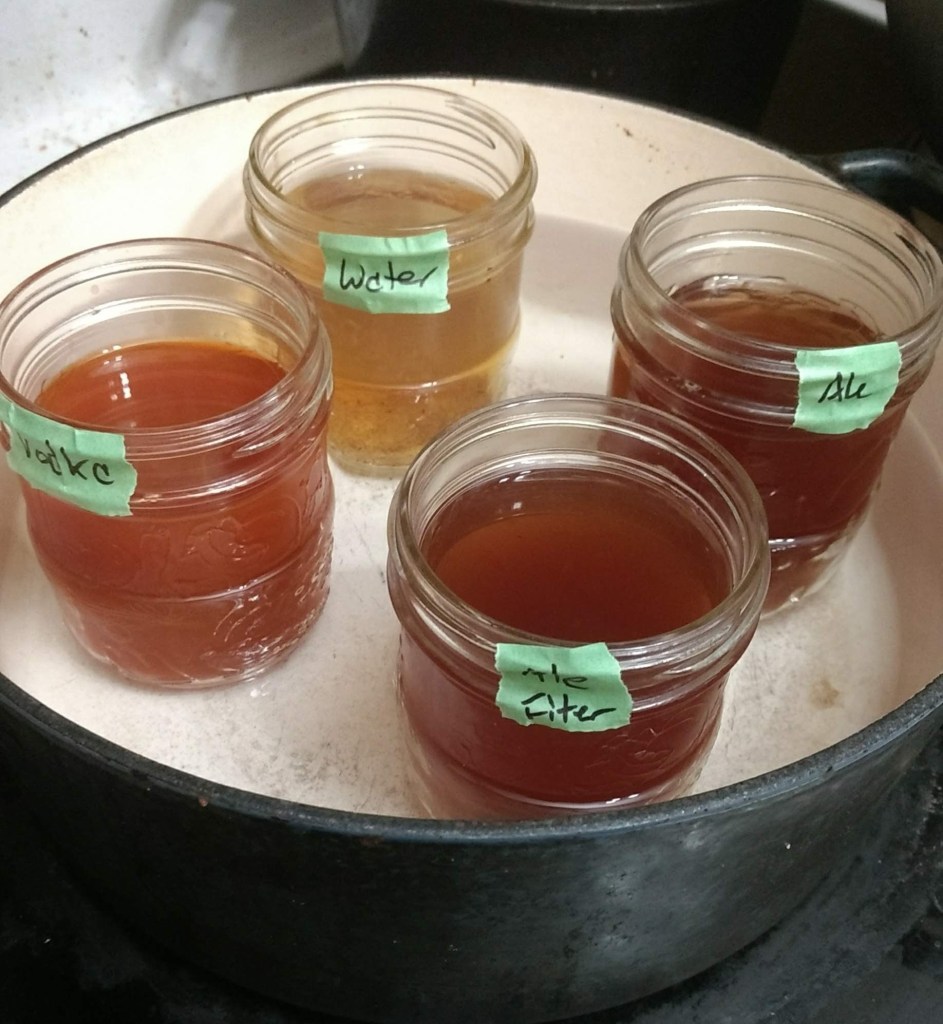
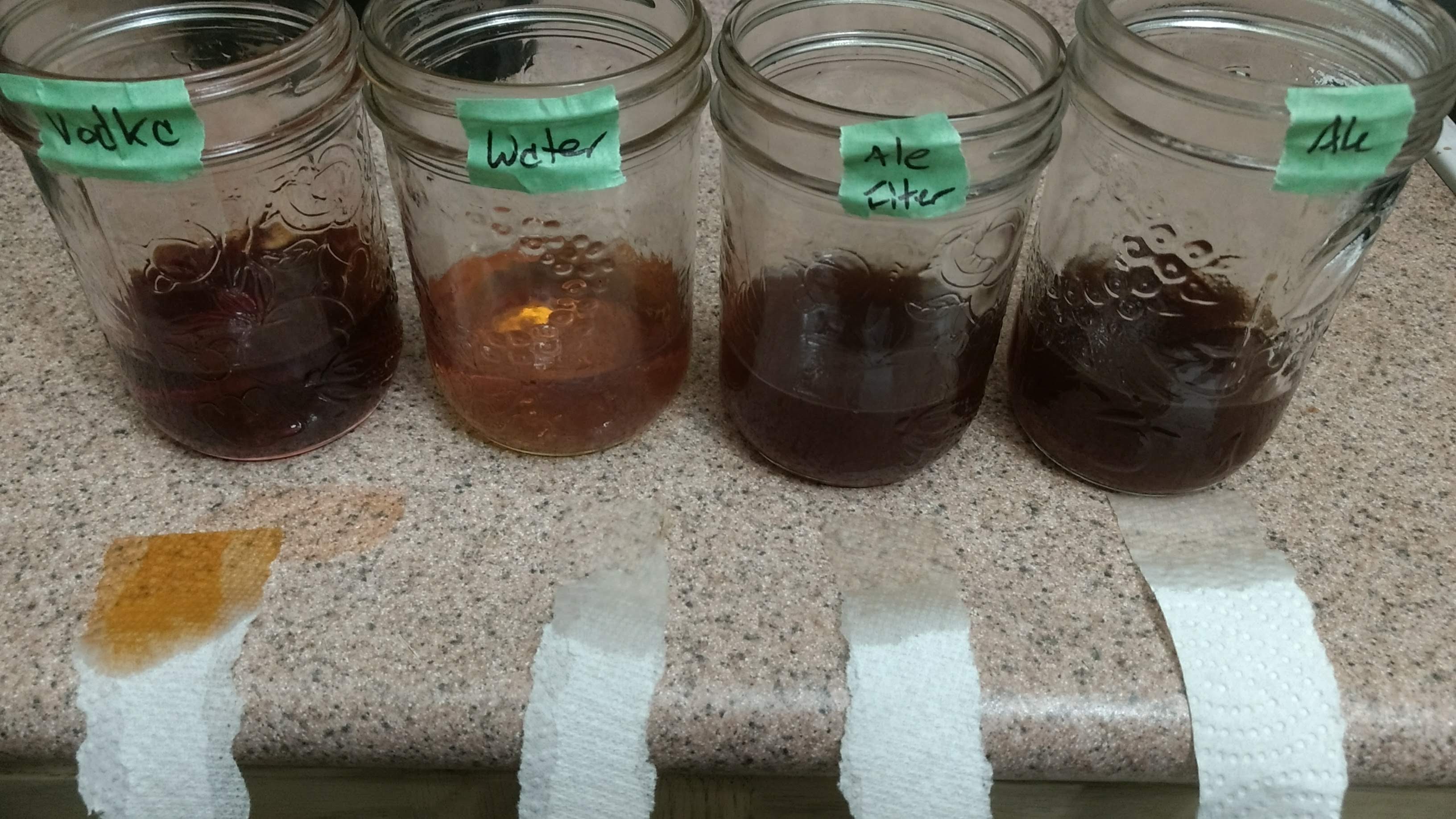
The four jars are 5 g of padauk soaking in water, vodka, the ale I brewed and then.. just to be careful.. the ale that I brewed having been filtered through some butter muslin (good quality cheese cloth) that I stole from my cheesemaking spouse. It changed not a whit, nor was there any residue on the cloth, so it felt like an extraneous step. It sat for a few weeks at the back of the kitchen counter, largely being ignored to be honest, but not protected from light or anything, and kept at basic room temperature.

Eventually, I got off my butt and skeined off more silk, and got it mordanted with 10% alum. (Eventually I’ll write up more detail on that process, but honestly, it is barely exciting enough to get mentioned, let alone a whole post about it. Still, I’ll add it to the list.)

I usually dip a bit of paper towel into these dye baths just to see how much colour sticks there, it’s not a perfect indicator on how the dye bath is going to go, but you get the disappointment early at least. Rarely do you get no colour on a dip test and plenty of colour on your skein. Sometimes you can get pretty good colour on the dip and not great on the skein, so there’s opportunity for disappointment certainly, but it’s a good first guess.

I decided that I would dye all four at once in a water bath, as I just was not invested in working up four dye pots. Basically that means that each dye was in a jar, and that jar was in a large pot, filled about halfway up the jars and the whole thing heated on the stove. I do most of my dye work hot, I don’t have the patience (usually) to leave something for a couple of months at room temperature to let the reaction happen slowly. I generally want it now now now!

In this case, the dip test was a pretty good predictor. The water soak got my silk from white to vaguely beige. I had such high hopes for the ale soaked padauk, but the dip test tempered my expectations pretty solidly. It’s coloured at least, but not by much. Well sigh. The vodka was as an awesome a colour as ever, better this time for the longer soak!

Vodka, water, ale, filtered ale

Distilled alcohol is still the king of extraction, the fermented side of things is letting me down here. At this point, I am out of padauk to play more with it as my dyestuff, but I’m not yet out of alcohol extractions to experiment with! Suggestions welcome on the next dyestuff to include. (Must not extract well in water, must extract well in alcohol.) I am also on the hunt for any sort of historical context for alcohol extraction of dye. I’ve only really started poking there, but if you have a lead on it (pre-1600 please!), let me know!

Friday event roundup (Mar 26, 2021)

There is so much going on online that I’m going to try and sum up for the coming week and share some love to the awesome. Some SCA, a lot that is not. All times in Eastern, google can help you translate. If you know of other events you want to pimp.. pop ’em in the comments section!

Friday Mar 26, 2021

Saturday Mar 27, 2021

ad servitium somnium- A Service Schola (East Kingdom) or the FB event All day

Historical Textiles textile talk: Diamond Twill vs Goose Eye (1 pm EDT FB live)

Monday Mar 29 – Thursday Apr 1

EXARC Experimental Archeology Conference (EAC) 12 (Youtube and Discord 2 am EDT – 3pm EDT Each day) (double check the time, the EU goes to daylight savings on Sunday, so I might be an hour off)

Thursday Apr 1

Churches Conservation Trust: PAINTING THE PASSION WITH PASSION: Giotto & the Easter Story with Dr Richard Stemp FB Live 9 am EDT (double check the time, the EU goes to daylight savings on Sunday, so I might be an hour off)

Fermentology mini-seminars: The Evolution of Sour Taste in Hominids (4pm EDT Zoom/Youtube) Registration required

Heather ale

For those who know me RL, you’ll know the amusement in deciding to brew with heather flowers. (Heather brews a heather ale? How could I not!?) First, some background. I am off playing with dyes, and the next step in those experiments are to try some dye extractions with fermented alcohol, rather than distilled alcohol. Hey wait.. I’m a brewer, I have rapidly getting more stale grain in the brewing supplies! I can make this happen!

Photo by Julia Zaporozhchenko on Pexels.com

I decided that I wanted to make an unhopped ale, and hey look, there’s a baggie of dried heather buds in the brew supplies too, so let’s go with that. I only wanted to brew up a gallon batch, as I really only needed this for dye experimentation and honestly drinkability was a secondary hopeful feature.

I wanted my grain bill to end up being about 2 lbs. (I am very Canadian and liberally sprinkle measuring systems in my world, you’ve been warned) So I started with 1.3 lb from a bag labelled ‘base malt’. Who knows, I certainly don’t, but it was a nice light inoffensive choice, so base malt of questionable origin it is. Then I honestly just started polishing off last bits of bags of grain so a bit of honey malt (0.4 lb), and some Munich II (0.1 lb) and a good dash of flaked barley. (0.2 lbs) I had only about an once of dried heather buds, which was less than most recipes I found wanted, but that’s what I had, so that’s how much was going in.

Experience has taught me that I need about 6 litres (I warned out about the mixed measures) going into things to end up with about a gallon after the boil, so everything got mashed for an hour at 155F (ish), and then got the boil going. (Do not use my rough shorthand as a good how to on basic brewing, follow a real recipe! I can recommend these ones over at Beer Craftr.) No hops in this boil, but instead I popped in about half the heather flowers at the start and the other half with 10 mins left in the boil. Most of the recipes I was vaguely cribbing off of suggested adding honey near the end and I utterly forgot. So no honey top up for the yeastie beasties, and an OG (Original gravity, essentially a measure of the sugar that’s available for the yeastie boys..) of 1.052.

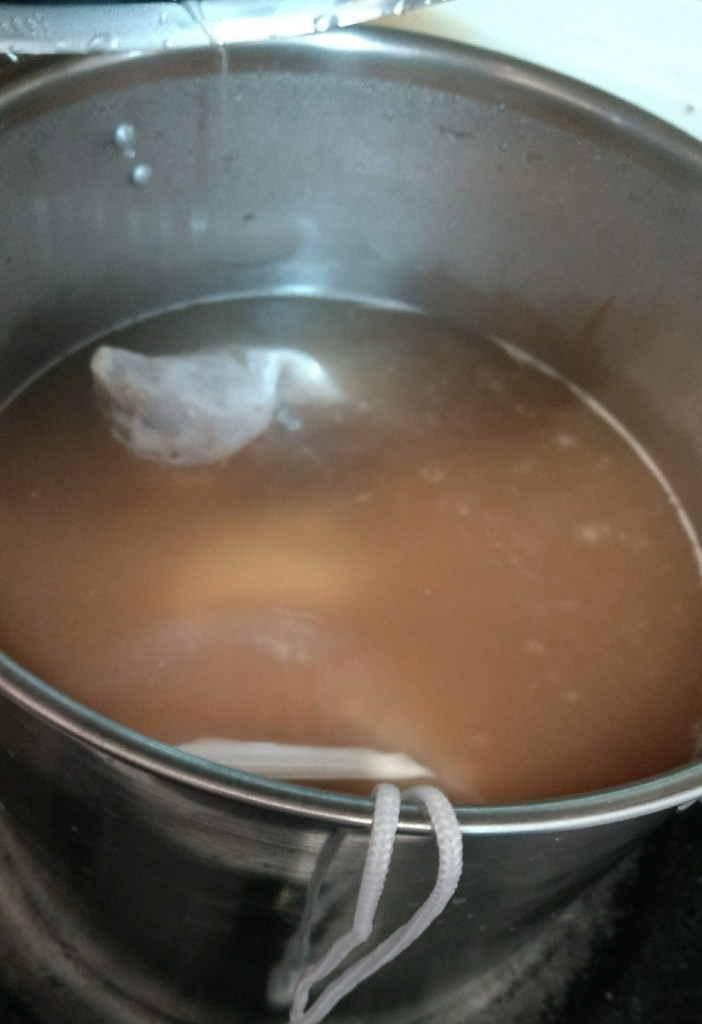
Ale in progress

It hung out for about 10 days to ferment, bubbling away nicely at the start, trailing off at the end as expected and the FG came in at 1.020. The difference between OG and FG, plugged into an arcane formula (aka I use a web form), tells me that my final ale sits at 4.2% Lower than I’d hoped, but oh right.. I didn’t remember the honey. Oh well, close enough. I primed it with a bit of honey, such that, in theory, my bottles would be carbonated (spoiler alert.. they were not. Sad trombone.)

A couple weeks in, I cracked a bottle and … it was terrible. It was sharp and acidy and unpleasant. Thank goodness for swing tops, I closed that sucker back up and all three bottles are hanging out in storage now. Two in the cheese cave and one in the fridge. Less what I used for my dye experiments, of course. Perhaps forgetting about them for a year or two might make it drinkable. Stranger things have happened!

Friday event roundup (Mar 19 2021)

I probably should have started doing this a year ago, but hey.. better late than never, I suppose. There is so much going on online that I’m going to try and sum up for the coming week and share some love to the awesome. Some SCA, a lot that is not. All times in Eastern, google can help you translate. If you know of other events you want to pimp.. pop ’em in the comments section!

Friday Mar 19

CMRS Barbara A. Hanawalt Public Lecture: Max Adams (Independent Scholar) – “The Wood Age: A Thought Experiment in Past, Present and Future Human Ecologies” (Registration required) 16:00 EDT

Saturday Mar 20

Virtual Mudthaw (East Kingdom) Noon – evening

Ealdormere Court 19:00 EDT

Sunday Mar 21

First People talk in the SCA 21:30 EDT

Monday Mar 22

Science & Art in a Sixteenth-Century Workshop: Hands-On History in the Making and Knowing Project 2021 Mossman Lecture (Registration required) 17:00 EDT

Thursday Mar 25

MOST HIGHLY FAVOURED LADY: The Annunciation in the Art of our Medieval Churches 8:50 EDT

January is for Free Embroidery

I’ve actually been accomplishing and finishing projects and experiments and not writing about them, so there’s going to be some catching up. I know that it’s no longer January, we’ll just ignore the fact that I’m only talking about it (and indeed only finished it) in February. Close enough.

For those who haven’t been following along, this is part of my plan to go explore all of the embroidery categories from the East Kingdom’s embroidery guild. I got six (ish) categories done last year, and I hope to finish the other six this year (with at least one re-do from those first six.) Ostensibly I was going through it in alphabetical order, and while I did do a little jumping around, Free Embroidery was next on the list and so here we are.

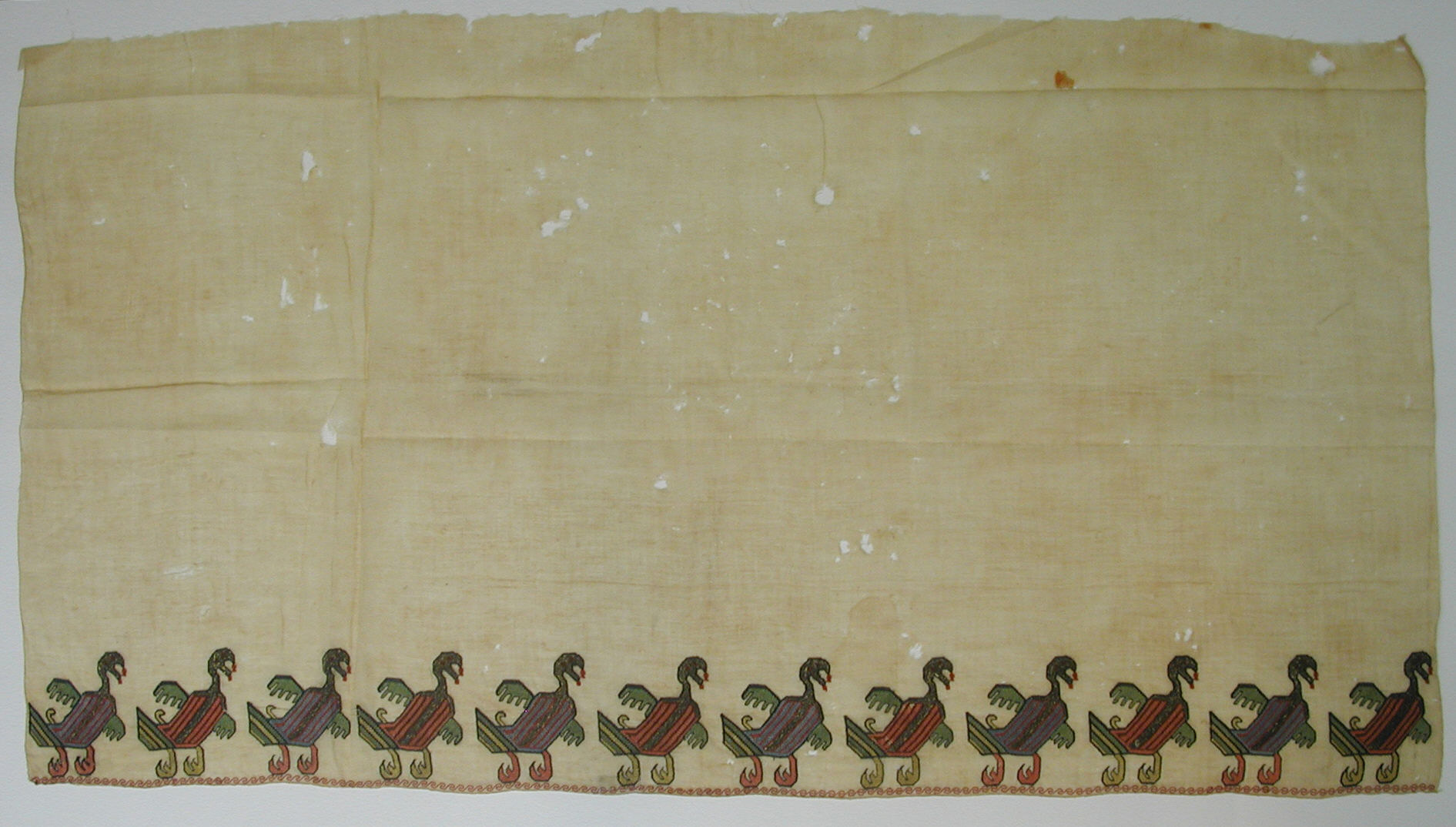
In hunting up inspiration pictures, I was casually surfing the MET’s archives and not really being inspired. Sure there’s lots of great things there, and I started (and quit) a polychrome motif that just wasn’t doing it for me last year. And then .. I found it. The perfect bit of glorious psychotic derpery from 15th century Egypt.

Fragment of Scarf or Cover 15th Century Egypt
https://www.metmuseum.org/art/collection/search/450540

Psychotic medieval fever dream fowl of some sort with dripping beaks? (jaws? Fangs?) I’m in! I poked both the Ealdormere Embroidery FB group and the EK Athena’s Thimble embroidery group for their thoughts on what stitches were used in the original, and it looks like some sort of interlaced stitch in my opinion. That being said, I remembered that this was supposed to be a free embroidery sample, and so I used a whole selection of stitches.

Many of my hand dyed embroidery threads

All of the thread was hand dyed by me, and it’s a mix of size 60/2 weaving silk and size 30/2 weaving silk. The 60/2 was just so very thin, it looked fairly anemic, but the 30/2 is a lofty squishy thread, which looked too plush for quite what I was aiming at. I suspect that my interlaced back stitch is a pretty good approximation of the body stitch in the original, but the original was a firmer, probably 3 ply thread at a guess that didn’t have quite so much squish as mine. Ultimately I used back stitch, interlaced back stitch, chain stitch, stem stitch and eyelets.

Psycho duckie progress

After I finished up my psycho ducks, I was super looking forward to just quickly popping on that delicate little edging of the original. My first attempt.. well it looked like someone had done it with an etch a sketch. Okay, thinks I, no biggie, I’ll trace it from the original, no biggie. Well, dear reader, that’s when it all went horribly wrong. I use a micron pen to trace. I love it, it’s fine tipped and very very permanent. I wasn’t getting the curves quite right so I sketched it a couple more times. And then the realization hit. Very. Very. Permanent. Well now I had a big inky mess on my hands which was supposed to be a quick and easy little border.

Micron ink. Awesome and forever.

It sat for a few weeks until I got past (mostly) being really really mad at myself, and then I just chain stitched the snot outta that bottom edge. Take THAT stupid ink stains. Bah! And so, my psychotic ducks are done. Another sample into the bag. Next up? Metal threads!

Finished!